


हिंदी में पढ़ें
Every year, we come across the term Chaturmas, Chaumas, Chaturmasya, a sacred four-month period dedicated to spiritual practices, fasting, devotion, and self-discipline.
Among the twelve months of the year, the four sacred months of Chaturmasya are considered especially auspicious for earning spiritual merit through selfless fasting, Naam Jap, charity, and devotion.
Chaturmas begins on Devshayani Ekadashi in the month of Ashadha (June–July) and concludes on Devprabodhini (Devuthani) Ekadashi in Kartik (October–November).
According to Hindu scriptures, Devshayani Ekadashi marks a divine pause in the cosmic calendar.
During this sacred period, devotees are encouraged to turn inward, practice self-restraint, and deepen their spiritual journey through fasting, prayers, mantra chanting, charity, and righteous living.
In this blog, let us understand the significance of Chaturmas, what to do, and what to avoid during this holy period.
When does Chaturmaas begin in 2026?
Chaturmaas 2026 begins on - 25 July (Saturday, Devshayani Ekadashi)
Chaturmaas 2026 ends on - 20 November, 2026 (Friday, Devprabodhini Ekadashi)
Ekadashi Tithi begins: 9:12 AM, 24 July 2026
Ekadashi Tithi ends: 11:34 AM, 25 July, 2026
What is Chaturmas?
Chaturmas (Chatur = Four, Maas = Months) is one of the holiest periods in the Hindu calendar.
It spans four divine months, beginning on Devshayani Ekadashi and ending on Devprabodhini Ekadashi.
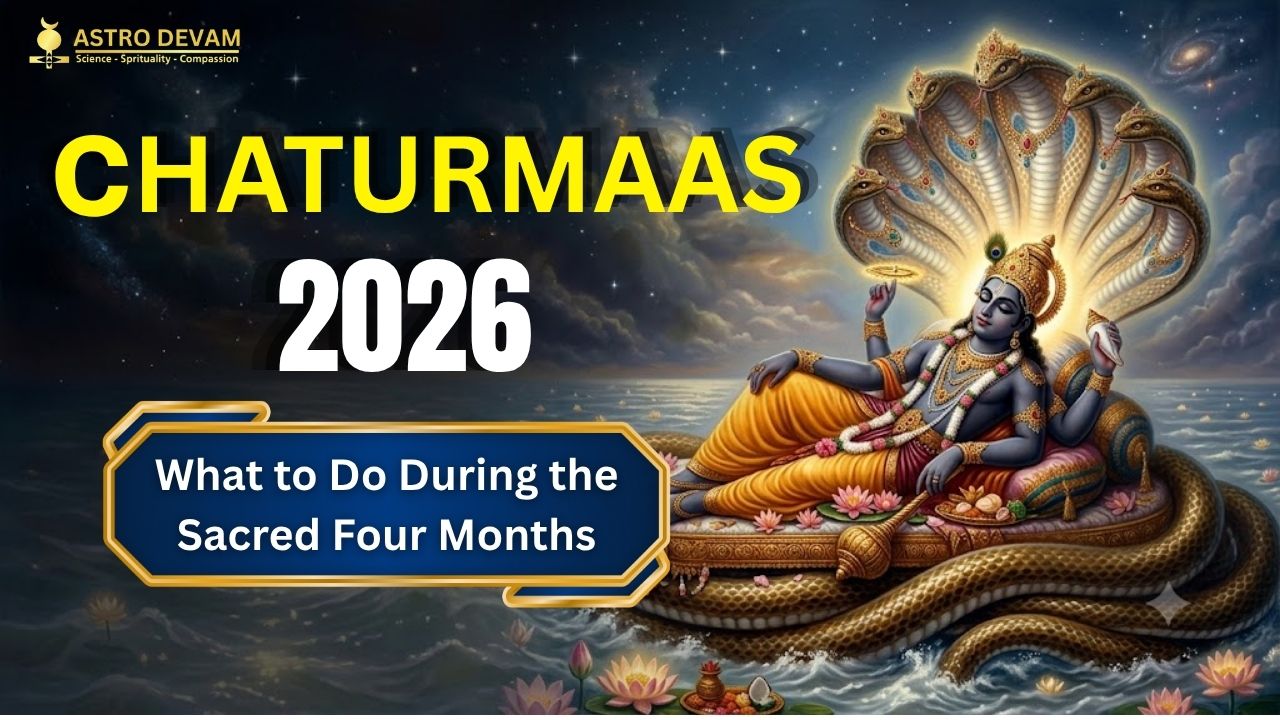
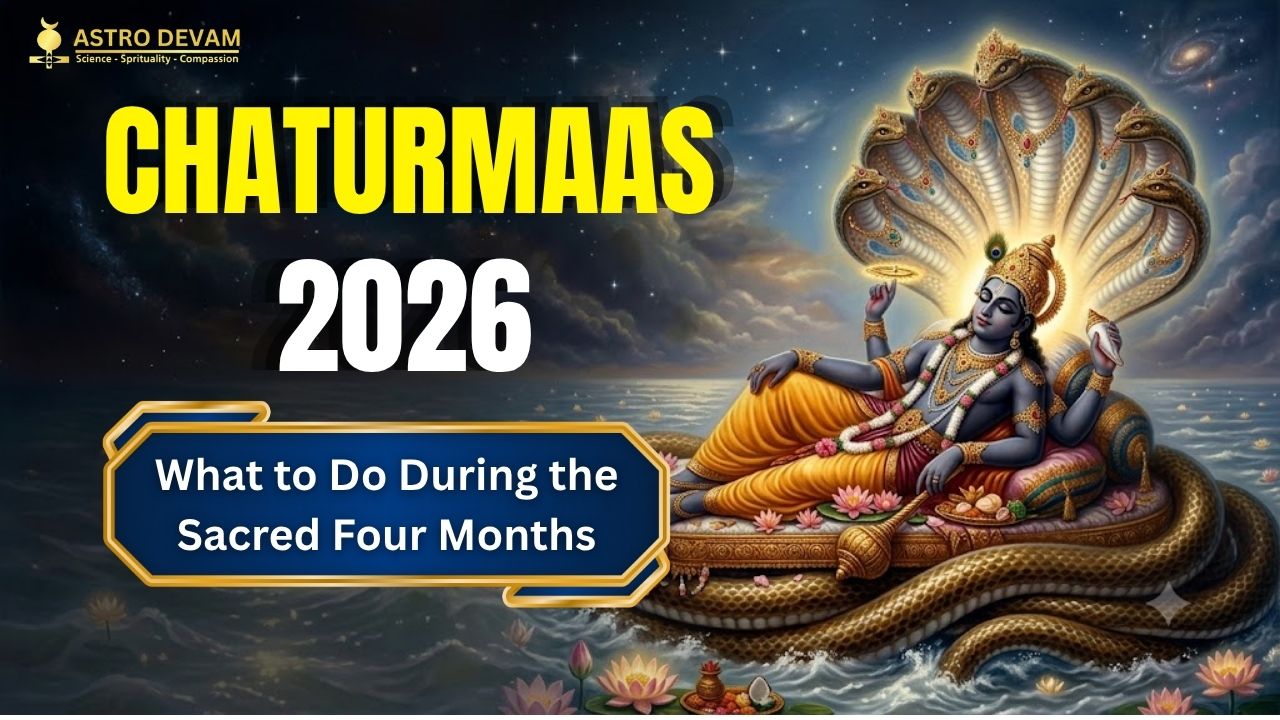
According to the Skanda Purana and Padma Purana, Lord Vishnu enters Yoga Nidra during this period, reclining on Sheshnag in the Ksheer Sagar (Cosmic Ocean).
After four months, he awakens on Devprabodhini Ekadashi, also known as Devuthani Ekadashi or Prabodhini Ekadashi, which falls on the eleventh day (Ekadashi) of the bright fortnight in the Hindu month of Kartik (October-November).
It is believed that while Lord Vishnu remains in Yoga Nidra, major auspicious ceremonies are generally avoided.
During these four months, Lord Shiva and other deities continue to oversee the universe, while devotees dedicate this period to worship, fasting, self-discipline, and spiritual growth.
Chaturmasya spans four sacred Hindu lunar months- Shrawan - Shravan (July–August), Bhadrapada (August–September), Ashwin (September–October), and Kartik (October–November).
The Significance of Chaturmaas Fasting
The Indian scriptures describe Chaturmas as an ideal period to:
• Practice self-control and discipline.
• Reduce material distractions.
•Increase devotion through japa, meditation, and scriptural study.
• Perform charity and acts of compassion.
Shloka from the Karma-Kāṇḍa (Karma-Kanda) section of the Vedas:
अक्षयं ह वै चातुर्मास्य-यजिनः सुकृतं भवति
Meaning~
"The spiritual merit (punya) earned by one who observes the Chaturmasya vow or performs the Chaturmasya sacrifice becomes imperishable."
According to certain Puranic traditions, during Chaturmasya, when Lord Vishnu is in Yoga Nidra, negative or asuric forces are believed to become more active.
Therefore, devotees are encouraged to observe vratas, chant mantras, perform charity, and engage in spiritual practices to seek divine protection and strengthen their inner resolve.
In fact, Chaturmas is a period to slow down and strengthen one's spiritual life.
Just as nature is renewed during the rainy season, Chaturmas offers devotees an opportunity to renew their minds, habits, and connection with the Divine through disciplined living and sincere devotion.
This is why most auspicious ceremonies such as marriages, Griha Pravesh, and Mundan are avoided during Chaturmas, while greater emphasis is placed on fasting, prayers, devotion, self-reflection, and righteous deeds.
Also, since Lord Vishnu is regarded as the sustainer and presiding deity for many auspicious ceremonies, it is believed that new worldly beginnings are postponed until He awakens.
It is during the Chaturmaas, major important Hindu festivals take place, including:
• Guru Purnima
• Nag Panchami
• Raksha Bandhan
• Krishna Janmashtami
• Hartalika Teej
• Ganesh Chaturthi
• Radha Ashtami
• Pitru Paksha
• Sharad Navratri
• Dussehra
• Karwa Chauth
• Diwali
• Devprabodhini Ekadashi
• Tulsi Vivah
Therefore, Chaturmas serves as a divine period, leading up to these sacred festivals.
What Should You do during Chaturmaas?
Chaturmaas is a period to observe self-control and spiritual discipline.
During Chaturmaas, the following activities are encouraged to do:-
1- Charity and helping others
Offering food, clothes, or donations to the needy. Annadaan (food donation) holds special significance)
2- Brahmacharya (celibacy)
Practising celibacy during Chaturmas helps conserve physical and mental energy and enables devotees to focus more deeply on their spiritual practices.
3- Sacrificing your favourite things
During Chaturmas, giving up something you enjoy, such as sweets, tea, coffee, certain foods, or other comforts is a way to cultivate self-control and strengthens willpower.
4- Sleeping on the floor
Some devotees choose to sleep on the floor instead of a bed as an act of austerity (tapasya). This is an act that represents simplicity to connect to the divine.
5- Observe Ekadashi Fasts
As the Chaturmaas is known for fasting practises, devotees are encouraged to observe fasts, especially on all Ekadashis that fall between Devshayani Ekadashi and Devprabodhini Ekadashi.
It purifies the body, and strengthen the mind.
6- Follow a Sattvic Diet
During these four months, it is advisable to follow a sattvic vegetarian diet, avoiding onion, garlic, meat, fish, eggs, and alcohol to help maintain physical and mental purity while keeping the mind calm and spiritually inclined.
7- Mantra Chanting
As Mantra Chanting is considered especially auspicious during the Chatur Maas, Reciting mantras such as:
• "Om Namo Bhagavate Vasudevaya"
• "Om Namo Narayanaya"
• Vishnu Sahasranama
is believed to calm the mind, cultivate devotion, and bring divine grace.
8- Reading Sacred Texts
Devotees are also encouraged to read sacred texts such as the Bhagavad Gita, Vishnu Purana, or perform daily recitations of devotional hymns.
What Should we Avoid During Chaturmaas?
On the other hand, certain activities are avoided during Chaturmas.
Weddings, housewarming ceremonies, mundan rituals, and new business ventures are usually postponed, as it is believed that divine energy is at rest, and initiating new ventures may not receive full blessings.
People are also advised to avoid digging the earth, cutting trees, or harming living beings during this time, as nature is in a regenerative state.
One should avoid gossip, indulging in arguments, or engaging in negative behavior during Chaturmaas.
This period is ideal for deepening one’s understanding of dharma (righteousness) and practicing inner discipline.
Avoiding Certain Foods During Chaturmaas?
Shloka~
दधी- दुग्धम तथा तक्रम गुडम शाकंम तथा वच वर्जना देव भो विप्र मुक्ति भागी न संशयः
Meaning~
"A person who, during Lord Vishnu's period of Yoga Nidra (Chaturmas), abstains from curd, milk, buttermilk, jaggery, and green leafy vegetables in accordance with the prescribed observance, attains the grace of Lord Vishnu and ultimately becomes worthy of liberation (moksha). There is no doubt about this."
Chaturmaas First Month (Shrawan)- Green leafy vegetables like spinach should be avoided.
Chaturmaas Second Month (Bhadrapad) – Curd and curd-made items like buttermilk, Kadhi, lassi, etc should be avoided. Charanamrit offered to Lord Vishnu is acceptable. There is no prohibition on it.
Chaturmaas Third Month (Ashwin) - Milk should be avoided. However, milk-made items can be consumed. There are no restrictions on it. Charanamrit offered to Lord Vishnu is acceptable.
Chaturmaas Fourth Month (Kartik) –Urad Daal and items prepared with the Urad daal should be avoided.
You must be wondering - why some foods are avoided in chaturmas vrat?
The reason for avoiding these foods during the Chaturmaas is both spiritual and scientific. Chaturmas is mostly the rainy season, and certain insects and bacteria may grow in green leafy vegetables.
Also, during the monsoon, metabolic activity may slow down, causing lactose intolerance for milk and curd.
From spiritual point of view, many people take a personal vow (niyam) during Chaturmas, such as avoiding certain foods, speaking less, or not sleeping on a bed, to cultivate self-control and higher level of spiritual growth. These vows serve as tapas, building inner strength.
Conclusion
The four months of Chaumas are an opportunity to detox life, not just physically, but also spiritually.
By simplifying our lifestyle, and cultivating devotion, we align ourselves with higher consciousness.
Just as Lord Vishnu enters Yog Nidra on Devshayani Ekadashi, cosmic energy becomes inward-facing, supporting practices like prayer, meditation, self-discipline, and self-study.
Whether you observe a simple fast, take a personal vow, or dedicate more time to spiritual practices, following sacred activities with sincerity and faith can help experience greater peace, self-discipline, and spiritual growth.
Frequently Asked Questions
1. Does Chatur Mas come every year?
Yes. Chaturmas is observed every year according to the Hindu lunar calendar. It begins on Devshayani Ekadashi in the month of Ashadha and concludes on Devprabodhini (Devuthani) Ekadashi in the month of Kartik.
2. Can we marry during Chaturmas?
Marriages are generally prohibited during Chaturmas because Lord Vishnu is believed to be in Yoga Nidra (divine sleep). Marriage ceremonies are resumed after Devuthani Ekadashi, when Lord Vishnu awakens.
3. Can I eat non-veg in Chaturmas?
If you wish to attain spiritual growth and inner purity, it is traditionally recommended to follow a sattvic vegetarian diet during Chaturmas.
4. Can we start a new business during Chaturmas?
Chaturmas is not considered the most favourable period for beginning major new ventures, including starting a new business.
New beginnings are resumed after Devprabodhini Ekadashi.
However, if circumstances require starting a business, you can consult our qualified astrologers and perform appropriate prayers before commencing the venture.
5. Can we do Griha Pravesh in Chaturmaas?
It is recommended to avoid performing a Griha Pravesh ceremony during Chaturmas. Once Chaturmas concludes and Lord Vishnu awakens from His divine Yoga Nidra on Devprabodhini Ekadashi, you can perform your Vastu Shanti and Griha Pravesh ceremony with full devotion and celebration.
Follow for regular updates ~ Instagram, Facebook, YouTube

Share this post
About the Author

Written by AstroDevam Team. Keep visiting for regular posts on Astrology, Vastu Shastra, & more...
Related Posts



Chaturmas 2026: Four Divine Months after Devshayani Ekadashi – Significance, What to Do in Chaturmaas & What to Avoid


Topics
- Akshaya Tritiya
- Aura Scanning
- Real Rudrakshas
- Pitra Paksha, Shraddh, Kanagat
- Navratri
- Shubh Muhurat
- Significance of Parad Idols
- Dussehra, Diwali, Dhanteras, Bhai Dooj
- Planetary Transits, Retrograde & Direct Movements
- Logo Shastra
- Vastu Shastra
- Festivals
- Mahashivratri
- Vastu Pyramid Yantras
- Yantra
- Astrology
- Gemstone
- Teej
- Nag Panchami
- Vedic Yagya
- Janmashtami
- Daily Prediction for 12 Zodiac Signs
- Daily Numerology Predictions for all Numbers
- Weekly prediction for all zodiac sign
- Solar Eclipse
- Karwa Chauth
- Diwali
- Vastu Tips
- Tulsi Mala
- Religious
- Chaitra Navratri
- Free Tips
- Rakshabandhan
- EKADASHI
- Ganesh Chaturthi
Tags

Comments