


Read in Hindi
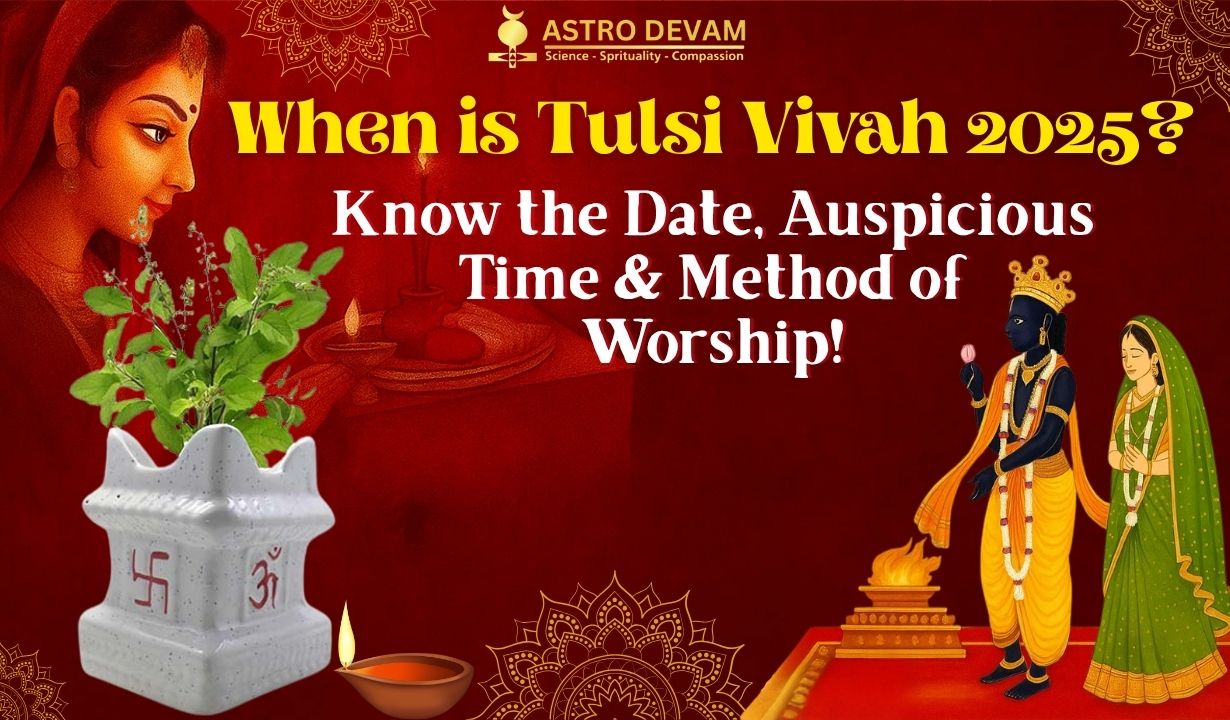
Tulsi Vivah 2025: Significance, Story, Date, Puja Vidhi & Spiritual Benefits!
Introduction: The Sacred Importance of Tulsi in Hindu Culture!
Tulsi, the holy basil, is a fragrant Indian herb that holds immense reverence in Hindu tradition. Worshipped as an incarnation of Goddess Lakshmi, the divine consort of Lord Vishnu, Tulsi symbolizes purity, devotion, and prosperity. Its leaves are essential in the worship of Lord Vishnu and all His avatars, including Shri Ram, Krishna, and Balaram.
Every part of the Tulsi plant—leaves, stems, roots, and seeds—has spiritual and medicinal importance. Traditionally, almost every Hindu household had a Tulsi plant in the courtyard, where daily worship was offered to invite blessings and positivity.
About Tulsi Vivah Festival:
Tulsi Vivah, also known as the marriage ceremony of Tulsi and Lord Vishnu (Shaligram), marks the beginning of the auspicious Hindu wedding season. Celebrated on Ekadashi or Dwadashi tithi of the Kartik month, Tulsi Vivah is symbolic of the divine union of Lord Vishnu and Goddess Lakshmi in the form of Tulsi.
Tulsi Vivah 2025 Date & Muhurat:
- Tulsi Vivah Date: Sunday, November 2, 2025
- Dwadashi Tithi Begins: 07:31 AM on November 2, 2025
- Dwadashi Tithi Ends: 05:07 AM on November 3, 2025
This sacred day is celebrated with devotion, signifying the onset of the Hindu marriage season and the victory of faith, love, and dharma.
Tulsi Vivah Puja Vidhi:
Tulsi Vivah is performed either at home or in temples with grandeur and devotion. The rituals closely resemble a Hindu wedding ceremony.
Preparation:
- Set up the mandap with four sugarcane or banana tree shoots.
- Decorate two chowkis — one with red cloth for Tulsi (the bride) and the other with yellow cloth for Vishnu/Shaligram (the groom).
- Place the Tulsi plant on the right chowki and Shaligram/Vishnu idol on the left.
Main Puja Steps:
- 1. Place a Kalash filled with water, rice, and a coin; decorate it with mango leaves and a coconut wrapped in sacred mauli.
- 2. Offer flowers, garlands, kumkum, haldi, roli, sweets, fruits, and bhog.
- 3. Light a diya and recite Tulsi Vivah mantras.
- 4. Tie a sacred cotton thread between Tulsi and Shaligram, symbolizing their divine marriage.
- 5. Conclude the ritual with Aarti and Prasad distribution.
Tulsi Pooja Mantra:
नमः नमः तुलसी पाण्यां हरेः प्रियायै ।
नमः श्रीमहालक्ष्म्यै नमो नमो वेदवेद्यायै धर्म्यै धर्म्यै नमोऽस्तुते ॥
Meaning:
Salutations to you, O Tulsi, beloved of Lord Hari. You are the embodiment of prosperity, remover of sins, and bestower of righteousness and spiritual growth.
Tulsi Vivah Story: The Divine Tale of Vrinda & Jalandhar!
Tulsi Vivah is rooted in a powerful Puranic legend involving Vrinda (Tulsi Devi) and Jalandhar, the mighty asura king.
Vrinda was born as a devotee of Lord Vishnu and later married Jalandhar, who gained great strength because of her chastity. Jalandhar waged war against the Devas, and no one could defeat him due to Vrinda’s purity.
At the Devas’ request, Lord Vishnu disguised himself as Jalandhar and deceived Vrinda, causing her chastity to break. As a result, Jalandhar was killed by Lord Shiva in battle. Realizing Vishnu’s act, Vrinda cursed him to turn into a Shaligram stone, symbolizing his stillness. Heartbroken, Vrinda immolated herself in the fire.
From her ashes sprouted the Tulsi plant. Vishnu declared that Tulsi would be worshipped alongside Him in all rituals and that no offering to Lord Vishnu would be complete without Tulsi leaves. This marked the origin of Tulsi Vivah.
Importance & Significance of Tulsi Vivah:
Tulsi Vivah represents the sacred union of purity and divinity — a bond between Tulsi (Lakshmi) and Vishnu (the preserver of the universe). The festival symbolizes the beginning of the Hindu wedding season and the end of the monsoon.
Tulsi is also renowned for her spiritual and medicinal properties. It is said that performing Tulsi Vivah brings prosperity, marital harmony, and divine blessings to households. The ritual also promotes health and spiritual cleansing by removing negative energies.
How to Worship Tulsi Plant at Home:
Performing Tulsi Puja daily or during Tulsi Vivah enhances positivity and devotion at home.
Step-by-Step Worship:
- 1. Keep the area clean and sunlit.
- 2. Light an earthen lamp or diya filled with ghee near the plant.
- 3. Offer water with devotion and chant Tulsi Maa mantras.
- 4. Present garlands, sweets, and flowers.
- 5. Circumambulate the plant seven times.
- 6. Avoid plucking leaves on Sundays and Ekadashi.
- 7. Place a Shaligram near the plant and offer your prayers.
Devotion to the Tulsi plant is said to attract divine blessings, peace, and marital happiness.
Tulsi Puja for Early Marriage:
According to astrology, those facing delays or obstacles in marriage should perform Tulsi Puja with sincerity. Worshipping the Tulsi plant helps remove planetary barriers and aligns destiny toward a suitable life partner.
Tulsi Vivah, in particular, is believed to remove negativity, bring auspiciousness, and bless devotees with marital bliss, harmony, and prosperity.
Types of Tulsi Plant:
There are four main varieties of Tulsi, each with distinct spiritual and medicinal qualities:
- Rama Tulsi (Green Leaf Tulsi) – Also known as Lakshmi Tulsi, it promotes health and prosperity.
- Krishna Tulsi (Shyama Tulsi, with purple leaves) – Purple-leaved variety associated with Lord Krishna; known for its strong aroma and healing powers.
- Vana Tulsi – Purple-leaved variety associated with Lord Krishna; known for its strong aroma and healing powers.
- Kapoor Tulsi – Heavy-flowered Tulsi with fragrant leaves, representing purity and divine connection.
Importance of Tulsi Plant & Leaves:
Tulsi is often called the Queen of Herbs for her medicinal, spiritual, and environmental benefits. In Ayurveda, Tulsi leaves are used to boost immunity, cure respiratory issues, and enhance mental clarity.
Spiritually, Tulsi purifies the environment and attracts divine energy. Her leaves are offered to Lord Vishnu, symbolizing surrender, love, and sanctity. Every Hindu home with a Tulsi plant is believed to be blessed with peace, health, and prosperity.
Conclusion:
Tulsi Vivah is not merely a ritual; it’s a divine reminder of love, faith, and cosmic balance. By performing this sacred ceremony, devotees invite health, happiness, and spiritual elevation into their lives.
So, on November 2, 2025, celebrate Tulsi Vivah with devotion, understanding, and joy—honoring the eternal union of Lord Vishnu and Goddess Lakshmi through the sacred Tulsi plant.
Facing life problems?
Talk to the Best Astrologers in India Achary Kalki Krishnan Ji & Acharya Anita Baranwal Ji to get the best solutions. Schedule Today!
Get Regular Updates on ~ Instagram, Facebook, YouTube

Share this post
About the Author

Written by AstroDevam Team. Keep visiting for regular posts on Astrology, Vastu Shastra, & more...
Related Posts






When is Tulsi Vivah 2025? | Tulsi Vivah 2025: Date, Shubh Muhurat, Puja Method, Significance & Benefits | Tulsi Vivah Kab Hai 2025? | Tulsi Shaligram Vivah kab Hai? | Tulsi Vivah Special!




Topics
- Akshaya Tritiya
- Aura Scanning
- Real Rudrakshas
- Pitra Paksha, Shraddh, Kanagat
- Navratri
- Shubh Muhurat
- Significance of Parad Idols
- Dussehra, Diwali, Dhanteras, Bhai Dooj
- Planetary Transits, Retrograde & Direct Movements
- Logo Shastra
- Vastu Shastra
- Festivals
- Mahashivratri
- Vastu Pyramid Yantras
- Yantra
- Astrology
- Gemstone
- Teej
- Nag Panchami
- Vedic Yagya
- Janmashtami
- Daily Prediction for 12 Zodiac Signs
- Daily Numerology Predictions for all Numbers
- Weekly prediction for all zodiac sign
- Solar Eclipse
- Karwa Chauth
- Diwali
- Vastu Tips
- Tulsi Mala
- Religious
- Chaitra Navratri
- Free Tips
- Rakshabandhan
- EKADASHI
- Ganesh Chaturthi
Tags

Comments